Our views on technology, security, marketing & design
AllAICloud BackupCloud SecurityConsumer ProtectionCritical InfrastructureCybersecurityData BreachData ProtectionDigital MarketingEmployee TrainingEthicsIT SecurityLocal BusinessLocal NewsMacNewsPrivacyScamsSelf-HostingShared HostingSmall BusinessSmart HomeTechnologyTips & TricksUncategorizedWeb Design
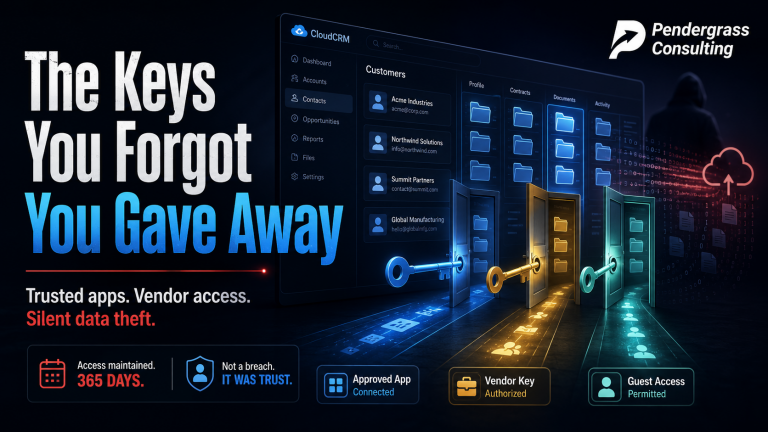
Microsoft just mapped a year-long data theft campaign that pulled customer records out of company after company’s Salesforce systems — and in a full year of stealing, the attackers never broke a single lock. Microsoft is explicit: this was not a Salesforce flaw. Every door was opened with a key the victim had already handed out — approved connected apps, stolen vendor keys, and guest access nobody locked down. Here’s why your business has these keys out too, why no alarm would notice, and the standing-key checklist worth running this week.
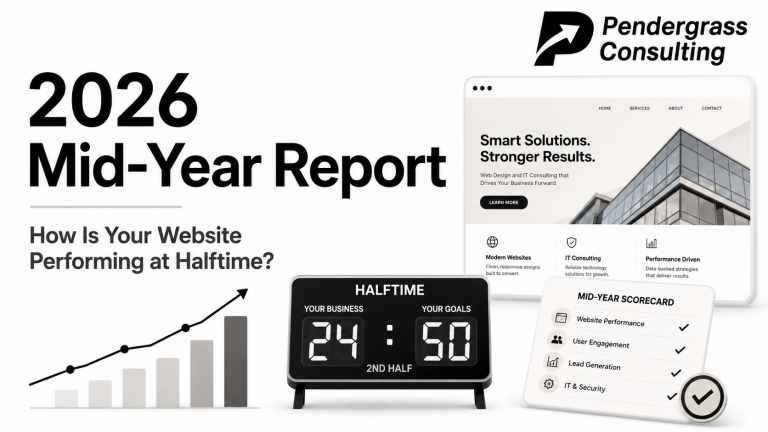
Every week we talk about other people’s businesses. Today, with 2026 at its halfway mark, we’re turning the lens on ourselves: what we’ve built, launched, and learned in the first half — 35+ businesses on our managed platform, a one-page site rebuilt into 25 and ranked #1 on Google, new services launched, and a build process proven again and again. Then we hand you the mirror: the halftime checklist every owner should run on their own website. Ours is written. Let’s make your second half the better half.

Two weeks ago we covered the scam that tricks you into infecting your own computer. New research just revealed what it’s grown into: a researcher analyzed 3,000 live samples and found automated servers handing every visitor the same trap in a freshly generated disguise — plus ready-made kits sold criminal-to-criminal, adoption by state-backed groups, and a technique Microsoft’s experts trace to nearly half of break-ins. The good news: the one human rule that defeats it hasn’t changed.

Aflac Japan just disclosed a breach exposing 4.38 million people — but the number that should stop every business owner is ten: the days attackers spent inside before anyone noticed. And they weren’t caught by an alarm; they were caught by a performance hiccup. If attackers were inside your systems right now, what exactly would notice them? For most small businesses the honest answer is: nothing, and no one. Here’s the detection lesson worth taking from this one.
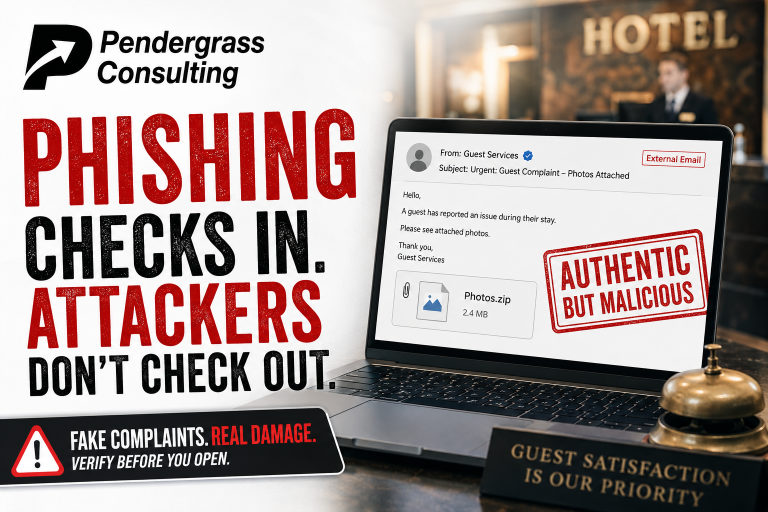
Microsoft is warning about a phishing campaign aimed at hotels: emails posing as guest complaints, booking inquiries, and health-inspection notices, with ‘photos’ of the problem attached. The photos are the trap — and the emails pass standard authenticity checks because they’re routed through real, trusted services. Here’s why this trick beats good employees, why every customer-facing inbox is at risk (not just hotels), and the one verification habit that stops it.

The 2026 World Cup is in full swing — and criminals prepared for kickoff more thoroughly than some of the teams. Researchers and the FBI have documented one of the largest fraud waves ever tied to a single event: 4,300+ fake FIFA websites, a 60x spike in fake betting apps, fake streams, hotel lookalikes, and thousands more fake domains parked and waiting. Here’s how the scams work, why your employees are targets on work devices, and the one instinct that outlasts the tournament.
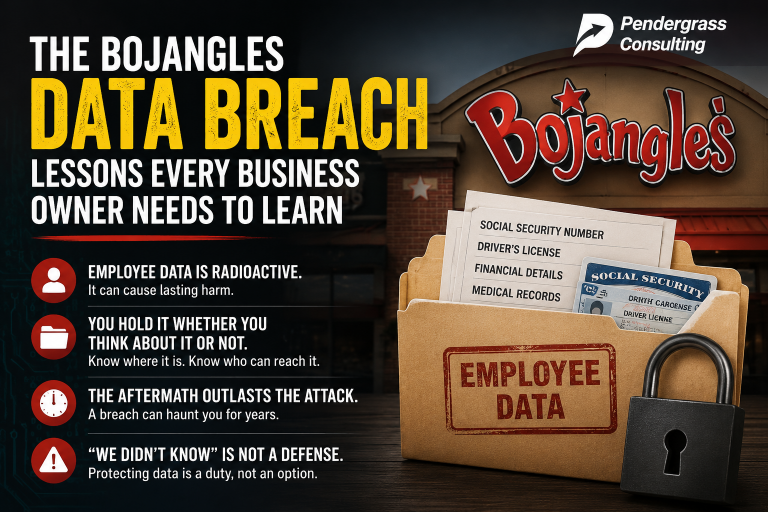
This one is close to home. Bojangles — the Charlotte-based institution with roughly 800 locations — is back in North Carolina headlines this week: a NC Business Court judge just ruled the class action over its 2024 data breach can move forward. Per the lawsuit, more than 387,000 files of EMPLOYEE data — Social Security numbers, driver’s licenses, financial details, medical records — were taken and shared on the dark web. The breach lasted three weeks. The fallout is in its third year. Here’s what every employer, large or small, should take from it — because you hold this exact data too.

Tomorrow is the Fourth of July, and you’ve earned the break — the grill, the family, the fireworks. But here’s a thought worth holding onto over the grill: even though you’re off the clock, one part of your business never will be. Your website is the one employee that never takes a holiday — working at 2pm on the 4th while a customer searches for exactly what you offer. The only question is whether it’s working for you or quietly turning them away. Here’s how to make sure yours does you proud.