
Our views on technology, security, marketing & design
AllAICloud BackupCloud SecurityConsumer ProtectionCritical InfrastructureCybersecurityData BreachData ProtectionDigital MarketingEmployee TrainingEthicsIT SecurityLocal BusinessLocal NewsMacNewsPrivacyScamsSelf-HostingShared HostingSmall BusinessSmart HomeTechnologyTips & TricksUncategorizedWeb Design
This Sunday is National Parents’ Day — and the best gift costs nothing: ten minutes and this field guide. Inside: the calls hitting families right now (including the grandparent emergency powered by AI that clones a voice from THREE SECONDS of audio), the full smishing lineup (fake tolls, stuck packages, bank alerts, ‘Hi Mom new number’), and the part most families never discuss — scams are AGE-TARGETED. Grandma’s traps, Mom and Dad’s traps, and the kids’ traps, each broken down: top lures, why they work, and exactly what to teach. Plus the five family agreements, how to pick a code word, and a printable fridge sheet. Every generation at the table, protected in one talk.
If anyone in your family has the Chick-fil-A app, check your email: the company began notifying customers July 20 — including North Carolina residents — that strangers accessed some Chick-fil-A One accounts in June. Here’s the twist worth the whole article: nobody ‘hacked’ Chick-fil-A. The attackers simply LOGGED IN, using passwords stolen from other websites’ breaches and tried automatically against the login page to see which still worked. It’s called credential stuffing, and it works for one reason: password reuse. What was exposed, why loyalty accounts are money nobody watches, the one-evening fix (in the right order), and why the same bots will eventually visit any business login page — including yours.
Researchers report that 20+ hijacked GOVERNMENT websites — the addresses we’re all taught to treat as the safest on the internet — were quietly turned into a delivery channel for malicious software. And it’s not a freak occurrence: 700+ university and tech sites hijacked in May, 38 state government sites in December, official domains misused across 20+ countries. Here’s how a ‘safe’ website turns dangerous, the one rule that protects you anywhere (trust the site, verify the ask), and the half of the lesson that belongs to everyone who owns a website.
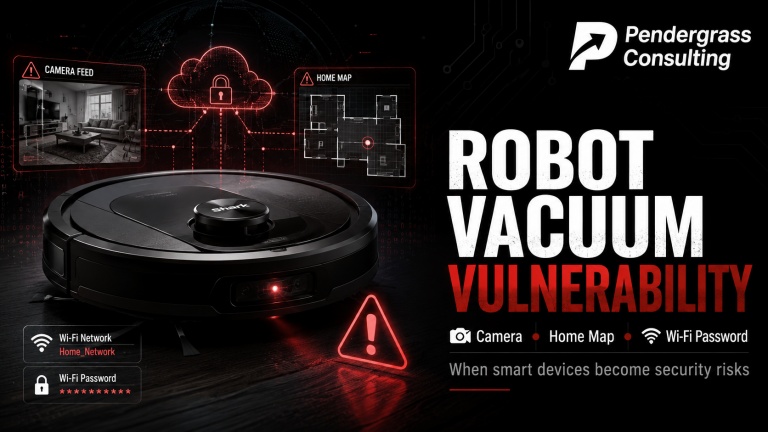
A researcher took apart a Shark robot vacuum, pulled out its digital ID, and found he could send commands to OTHER people’s vacuums across the same cloud region — by his account: watch the camera, drive the robot, read the map of the home, and lift the Wi-Fi password stored in plain text. 673,816 devices answered his knock in 24 hours. The lesson goes far beyond one vacuum: the gadget you never think of as a computer is a computer you never think about — holding a camera, a map of your building, and the password to your network.

Zoom — the app on just about every business computer in America — just patched one of the most serious flaws it has ever disclosed: a 9.8 out of 10 that could let a complete stranger, with no password, take over accounts across the network. The good news: Zoom found it itself, the fix is out, and no attacks are known. The catch: the fix only protects computers that actually get it — and a published patch starts a race with the criminals who study it. Update every machine this week. Then answer the harder question: who in your business actually owns making sure updates happen?
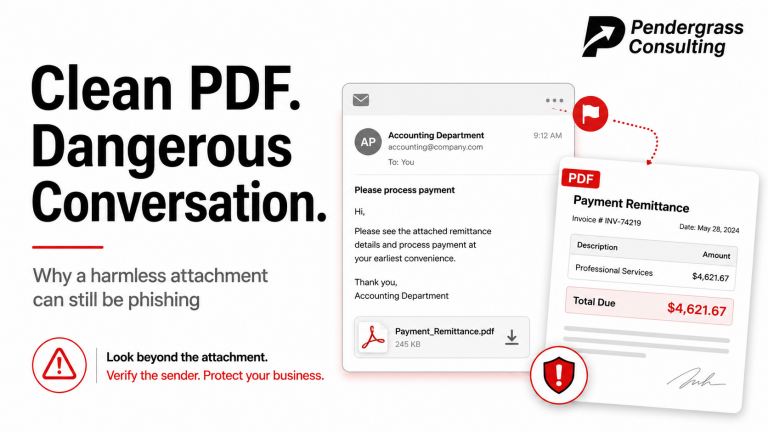
This week a phishing email landed in one of our own inboxes: a polite ‘Payment Advice Note’ from a medical device company we’ve never done business with, promising $4,621.67 and carrying a tidy little PDF. So we took it apart — without ever opening it — and found something surprising: the file was SPOTLESS. No scripts, no links, no payload. That’s not sloppiness; it’s the technique. The file was never the weapon — the conversation is. Here’s the full teardown, the three tells that exposed it, why criminals send clean attachments on purpose, and how to report suspicious emails to us safely. These are rampant right now.
/
July 19, 2026
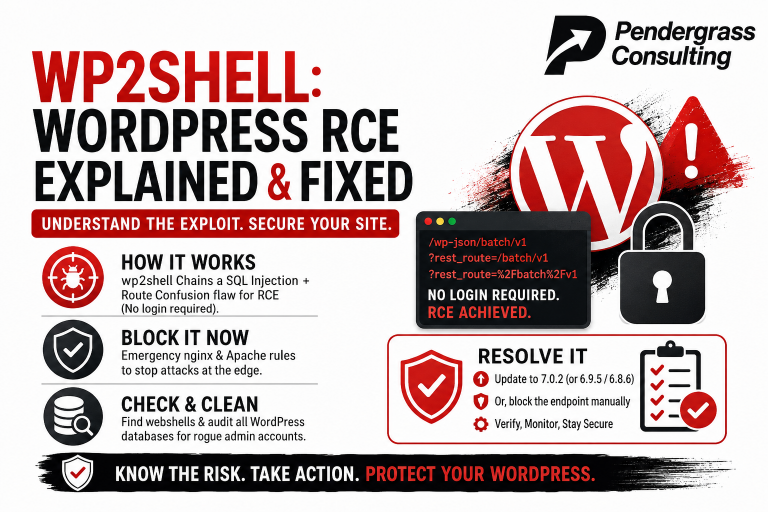
A critical pre-auth WordPress RCE (wp2shell / CVE-2026-63030) is under active exploitation. Here’s the nginx and Apache mitigation, how to hunt for an uploaded webshell, and how to audit every site’s database for a rogue admin in one pass.

Happy World Ice Cream Day! July 19 got us thinking about the question we hear from business owners more than almost any other: ‘What kind of website do I actually need?’ The honest answer is the same one you’d give at the ice cream counter: it depends on your flavor. Here’s the menu — the Classic Scoop (the portfolio site that seals the deal when referrals look you up), the Double Scoop (built to get you found in Google and AI search), and the Whole Sundae (the full business platform: CRM, invoicing, online payments, e-commerce, and newsletters for schools, trades, and real estate). Every flavor hand-churned by a real engineer — no AI slop, no template mills — built to make you stand out, and managed for growth with quarterly reviews.