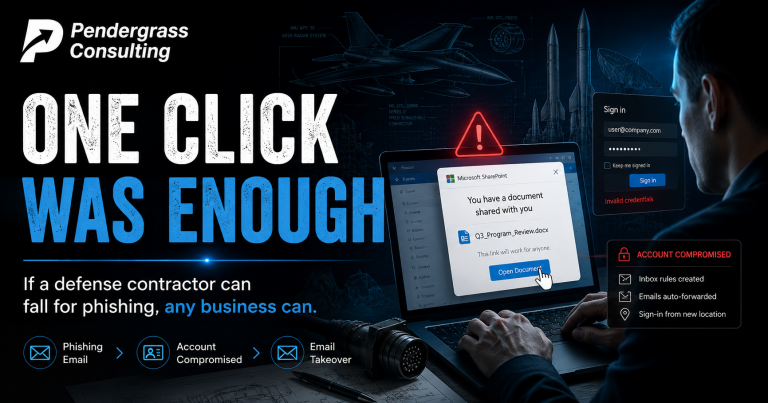
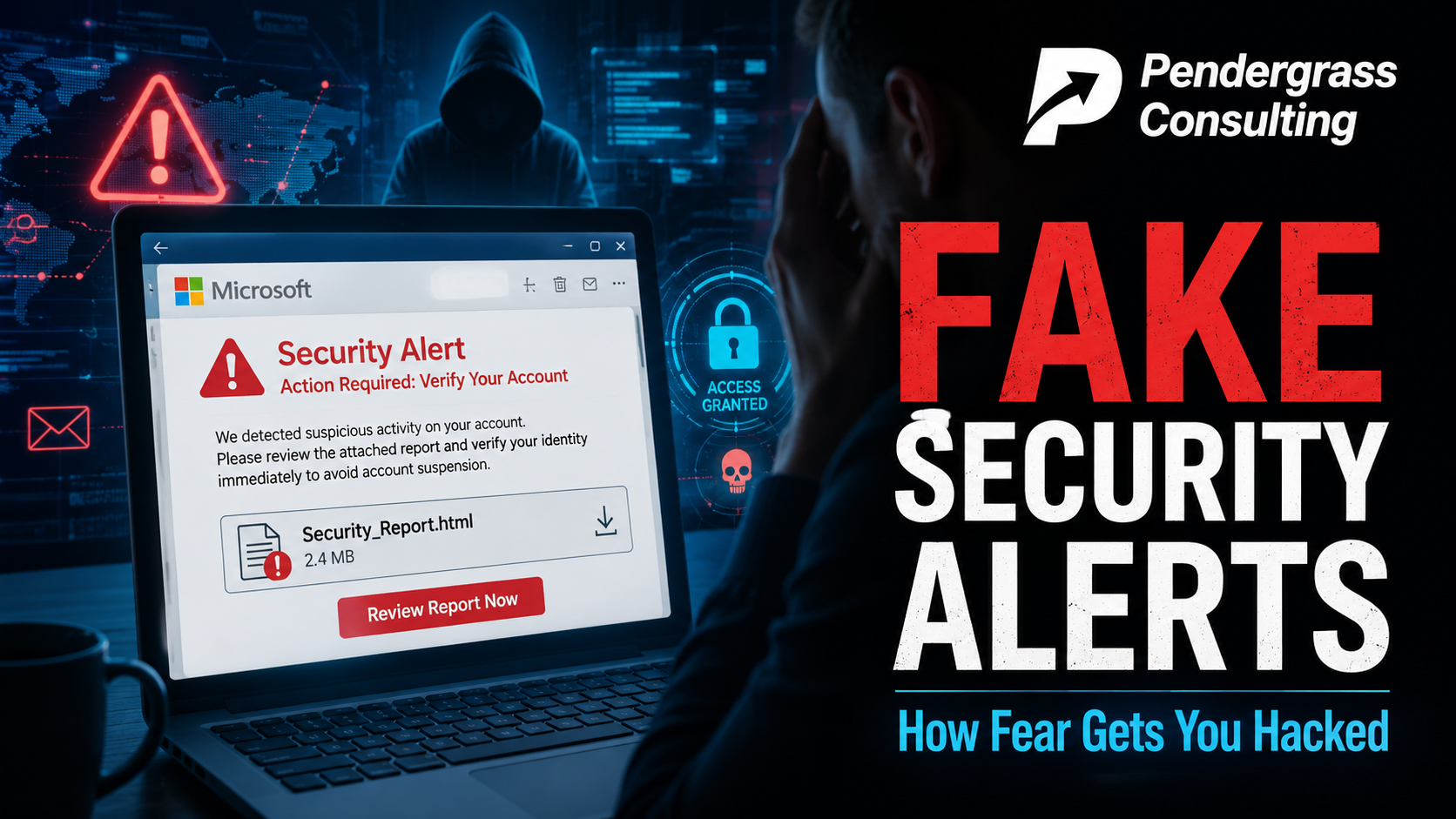
Imagine one of your employees opens their email and finds an urgent warning that appears to come from Microsoft: unusual activity has been detected on their account, someone may be trying to break in, and they need to review the attached security report immediately. It looks official. It is alarming in exactly the way a real security warning would be. And the natural human response — the responsible response, even — is to open that attachment right away and find out what is going on. That instinct is precisely the trap. Security researchers have just documented a campaign by a sophisticated state-sponsored hacking group that uses this exact fake Microsoft alert to take over computers, and the way it works should give every business owner pause.
The cruel genius of this attack is that it weaponizes the very thing we tell people to care about. We train everyone to take security warnings seriously, to act fast when their account might be compromised. These attackers turn that good instinct against the victim, using a fake warning to provoke a panicked, immediate reaction — and a person who is alarmed and rushing is a person who does not stop to think.
Fear is the real exploit
Every effective scam needs an emotional engine, and this one runs on fear. The fake email is carefully written to create alarm: your account may be compromised, someone may be abusing your login, act now to protect yourself. That manufactured panic is the entire point. When people are frightened about their security, they want to resolve the threat immediately, and that urgency short-circuits the careful, skeptical thinking that would otherwise kick in. The attacker is not really breaking into the computer. They are talking the person into opening the door, using fear as the crowbar.
It is worth noticing how completely backwards this is from what people expect. Most folks are on guard against an email promising them something good — a prize, a refund, an inheritance. Far fewer are on guard against an email warning them about something bad, because a warning feels like it is on your side. It seems to be helping you. That is exactly why impersonating a security alert is so effective: it disguises the attack as protection, and it makes hesitation feel irresponsible. Who wants to ignore a warning that their account is under attack?
What’s really in the attachment
The email tells the victim to open an attached “security report.” It is not a report. Tucked inside is a booby trap that, once opened, quietly begins installing malicious software onto the computer — and it is designed specifically to slip past the automatic defenses most people rely on, doing its work quietly in the background while the victim sees nothing alarming. The person thinks they responded responsibly to a security warning. In reality, they just invited an intruder in.
And the intruder this particular campaign installs is a serious one. Once it is in, it hands the attackers deep, ongoing access to the machine — the ability to record everything the person types, including passwords, to watch their screen, to listen in through the microphone, to dig through their files, and to pull data off connected USB drives. In short, total surveillance of the device and everything done on it. For a business, a single compromised computer like that is a catastrophe waiting to unfold: it is sitting inside your network, logged into your accounts, quietly feeding everything it sees to someone who wishes your business harm. And because it was built to stay quiet and evade the usual security tools, it can do this for a long time before anyone suspects a thing.
“But we’re not a target” misses the point
When a story mentions a state-sponsored hacking group, the natural reaction is to assume it has nothing to do with a normal small business. But that misses the part that actually matters. The technique — a fake, alarming security alert that panics someone into opening a malicious attachment — is not exotic or rare. It is one of the most common and effective tricks in the entire criminal playbook, used every single day by ordinary financially motivated crooks against ordinary businesses. The fact that an elite, well-resourced group relies on the very same approach is the strongest possible proof of how well it works. They could do almost anything, and this is what they chose, because fooling a human is still the most reliable way in.
So the question is not whether your business is important enough to attract a nation-state. It is whether someone on your team, on a busy afternoon, would open an alarming attachment that appeared to come from Microsoft, or their bank, or any other trusted name. If the answer is “probably yes” — and for most businesses it honestly is — then you are exposed to this exact category of attack, no matter how small or unremarkable you believe yourself to be.
The defense is a trained pause
You cannot software your way out of this one. The whole attack is designed to defeat the automatic tools and target the human instead, which means the human is where the defense has to live. And the defense is surprisingly simple to describe, though it takes real training to make automatic: when a message creates a sudden sense of fear or urgency about your account or your security, that feeling itself is the signal to stop. Not to ignore the warning, but to refuse to act on the message in front of you. To never open the attachment or click the link, and instead to check independently — by going directly to the real service the normal way, or by asking someone who knows. A genuine security warning will survive that pause every time. A fake one falls apart the moment you stop reacting and start verifying.
That trained pause, in the exact moment of manufactured panic, is the entire ballgame — and it is what real security awareness training builds. We teach the people on your team to recognize the emotional fingerprints of these attacks, to treat urgency as a reason for caution rather than haste, and to know exactly what to do when an alarming message lands in their inbox, so the instinct holds even when they are busy and rushed and the warning looks completely real. The most dangerous attackers in the world are still betting everything on one person reacting without thinking. The businesses that train that reaction take the bet off the table. Would your team open the attachment, or stop and check? That is the question worth answering before someone answers it for you.
Sources: The Hacker News; Genians Security Center; SC Media, June 2026.