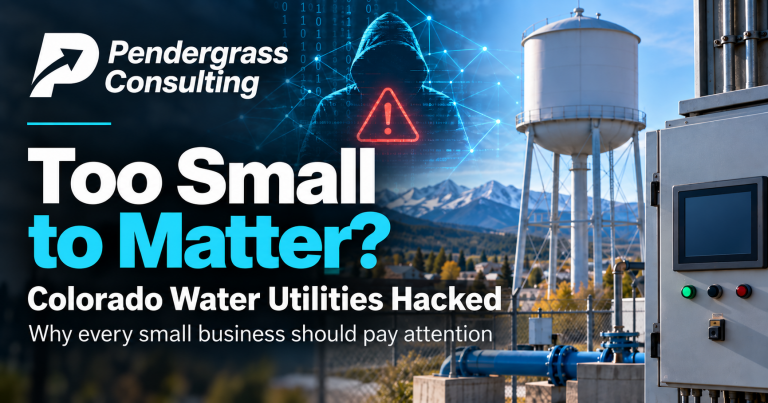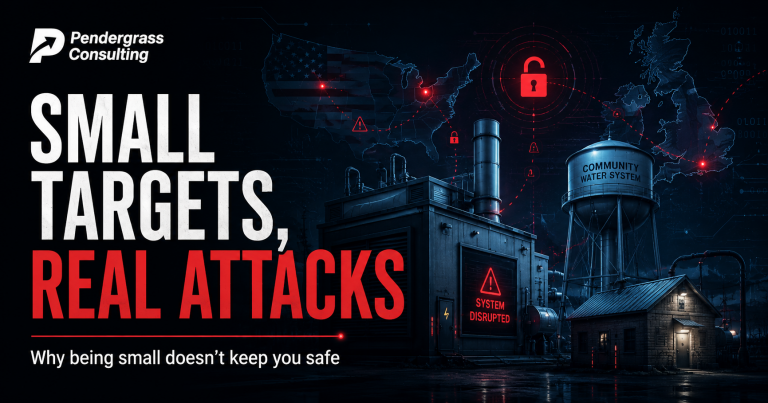
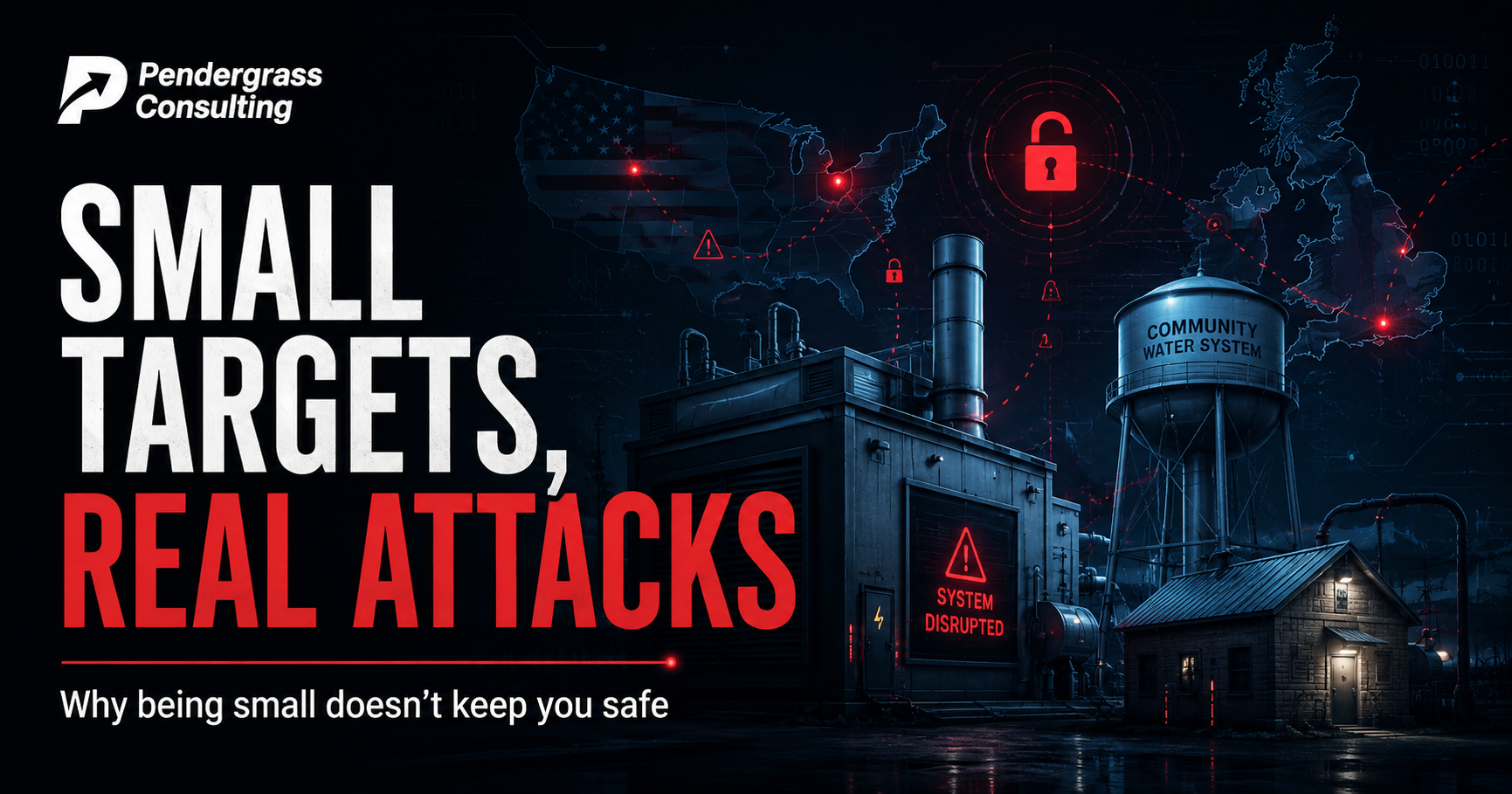
For months, officials on both sides of the Atlantic warned that it was coming. Now, according to news reports and security officials, it appears to have happened: a cyberattack knocked a small British power generator offline for four days this summer, and it arrived on the heels of a wave of attacks that struck more than 30 community water systems in the United States. British security officials attribute the power-plant incident to hackers linked to Iran, and U.S. authorities have connected the water-system attacks to the same source. It’s a genuinely significant moment — and it carries a lesson for small organizations that’s both urgent and, in an odd way, empowering.
Because here’s the thread that ties these incidents together, and it’s the whole point of this article: the targets weren’t massive, heavily-defended national power grids or major utilities. They were small. A generator described by a UK energy minister as “tiny.” Community water systems serving local towns. These attacks succeeded not by overpowering the strongest defenses, but by finding the weakest — the small, under-resourced, lightly-defended facilities that everyone assumed were too minor to bother with. If that sounds familiar, it should: it’s the exact vulnerability that defines most small businesses. This is the fourth story we’ve covered recently about attacks on the systems that run physical infrastructure, and together they point at one clear, actionable truth.
A quick word on how we’re covering this
These events sit against a backdrop of international conflict, and we’re going to stay in our lane as a technology and security firm rather than commentators on geopolitics. We’ll report what officials and reporting have actually stated — the attributions here come from British security officials and U.S. authorities, and we relay them as their stated findings — and then focus entirely on the practical takeaway for regular businesses. We hold no political position on any of this. What we care about is the security lesson, which applies far beyond power plants and water utilities.
What happened
Let’s lay out the facts as reported. In July, a small power generator in Britain was reportedly forced offline for about four days by a cyberattack. Notably, the UK energy minister was quick to reassure the public that there was never any threat to the wider grid and that nobody lost power — the affected generator was, in his words, small. Still, the government considered it serious enough to brief business leaders on steps to protect themselves afterward. British security officials, speaking to multiple news outlets, attributed the intrusion to hackers linked to Iran.
That incident followed a series of attacks in the United States, where more than 30 community water systems were hit. Attackers reportedly accessed the technology these small utilities use to remotely monitor and control equipment like pumps — the same category of remotely-managed industrial systems that we’ve written about before. U.S. authorities, along with an earlier joint government advisory, warned that lightly-defended water and energy facilities were being targeted specifically because they’re vulnerable, with the stated aim of causing disruption.
Reporting and experts have described the likely intent of the power-plant attack as a demonstration of capability — a message — rather than an attempt to cause mass harm. But whether the goal is a message or real damage, the method reveals the same strategic reality, and it’s one every small operation should absorb.
Why they went after the small targets
This is the heart of it. When you want to cause disruption but you can’t easily punch through the defenses of a major, well-protected power grid or a large utility, you look for a softer way in. And small facilities offer exactly that. As reporting on these incidents put it plainly, relatively small and often lightly-defended water and energy facilities give attackers a way to cause real-world, physical disruption without having to penetrate a heavily-guarded major grid or a military target. They’re the path of least resistance.
What makes these smaller facilities especially reachable is something they have in common with a huge number of ordinary businesses: they increasingly rely on internet-connected systems that let operators monitor and manage physical equipment remotely. That remote convenience is enormously useful — and it’s also a door. If that door isn’t well secured, an attacker who finds it can get inside and start interfering with the equipment on the other side. The very thing that makes modern operations efficient is the thing that, left unprotected, makes them vulnerable.
The lesson every small business should take from this: sophisticated attackers deliberately seek out the small and the under-defended, precisely because they’re easier to breach than the big, well-protected targets. Being small is not camouflage — it’s the opposite. It’s what put these particular facilities in the crosshairs. Whatever your business is, if you’re operating on the assumption that your size makes you not worth attacking, this is the story that should retire that assumption for good. The soft target isn’t the one that gets overlooked. It’s the one that gets chosen.
The direct parallel to your business
You might not run a water utility or a power plant, but the underlying situation translates almost perfectly to ordinary businesses. Think about how much of your operation now runs on internet-connected systems that can be reached and managed remotely:
- Security cameras and alarm systems you can check from your phone.
- Thermostats, door locks, and building systems that are internet-connected.
- Point-of-sale systems, and equipment a vendor can service remotely.
- Any specialized machinery or system in your business that’s connected to the internet for monitoring or convenience.
Every one of these is the small-business version of the remotely-managed systems that were attacked. Each is a convenience that, if left poorly secured, becomes a potential entry point — the same kind of door the attackers used against those small utilities and that generator. The scale is different, but the principle is identical: a remotely-reachable system that isn’t properly locked down is an opportunity for whoever finds it. And attackers find them by scanning the internet for exactly these soft spots, indifferent to how big or small you are.
The empowering part: you can be a hard target
Here’s where this turns from worrying to genuinely encouraging. If attackers succeed by seeking out the weakest and most exposed systems, then the goal is refreshingly clear: don’t be the easy one. You don’t have to build the digital equivalent of a fortress. You just have to not be the soft target sitting there with an obvious, unlocked door. The measures that accomplish that are the same practical fundamentals we come back to again and again, and they are entirely achievable for a small business:
- Find and secure every remote-access point. Identify all the systems in your business that can be reached from the internet, and make sure each one that needs to be accessible is protected with strong, unique credentials and, wherever possible, a second verification step. Anything that doesn’t truly need internet access shouldn’t have it.
- Eliminate default passwords everywhere. Internet-connected cameras, systems, and devices frequently ship with factory-set passwords attackers already know. These are among the very first things scanned for. Changing them is essential and easy.
- Keep everything updated. The systems attacked this way are often running outdated software with known, unpatched weaknesses. Keeping your connected equipment current closes those specific holes.
- Separate your critical systems. Where possible, important operational systems shouldn’t sit on the same open network as everything else. Sensible separation means that even if one part is compromised, an attacker can’t automatically reach everything.
- Dormant accounts and old access are a liability. Disable supplier or employee accounts that are no longer needed, and remote-access routes that were set up once and forgotten. Every unused door is one someone else might walk through.
Worth asking about your own business: Which of your systems can be reached from the internet right now — and are they all protected with strong credentials and a second verification step? * Do any of your connected devices still use their factory-default passwords? * Is your important equipment separated from your general network, or could a break-in anywhere reach everything? * And are there old vendor connections or unused accounts still active that nobody’s thought about in months? These are exactly the soft spots attackers look for.
The takeaway
The story of a small British generator and dozens of community water systems being knocked around by sophisticated attackers is unsettling. But its lesson is not that we’re all helpless before nation-state hackers. Its lesson is more specific and more useful: these attacks succeed by targeting the small and the soft, the facilities whose remote-access systems weren’t properly locked down. Size didn’t protect those targets — and the flip side is that a small business isn’t helpless either. The same conditions that made those facilities reachable are conditions you can identify and fix in your own operation.
That’s exactly what our environment review does. We find every internet-connected and remotely-accessible system in your business, check whether each is properly secured or sitting exposed with a default password or outdated software, and help you close the doors that shouldn’t be open — turning your business from a soft target into one an opportunistic attacker skips right past. The facilities in these stories were chosen because they were easy. The most valuable thing you can do is make sure yours isn’t. Let’s take a look together, before someone else does.
Sources: Reporting by The Telegraph, BBC, and others on the July 2026 UK power generator incident; statements from UK Energy Minister Michael Shanks and British security officials; U.S. FBI and EPA advisories and reporting on attacks against U.S. community water systems; Help Net Security; SecurityWeek; SC Media; Fox News; Intelligent CISO, August 2026. Attributions described here reflect the stated findings of British and U.S. officials. Specific technical indicators are omitted in favor of awareness-level guidance. This article takes no geopolitical position and focuses on the security lessons for small businesses.