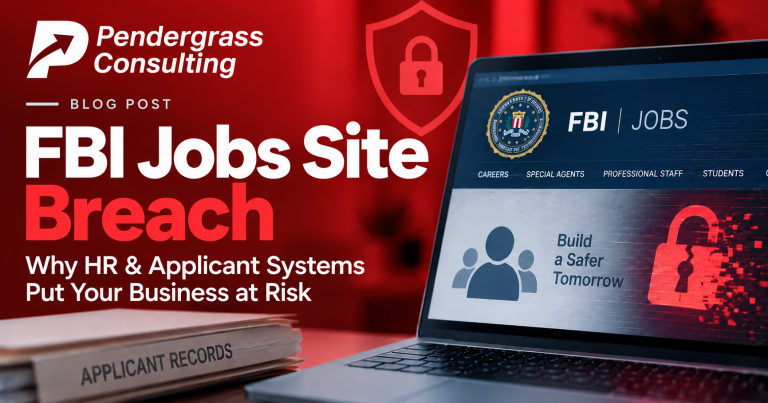
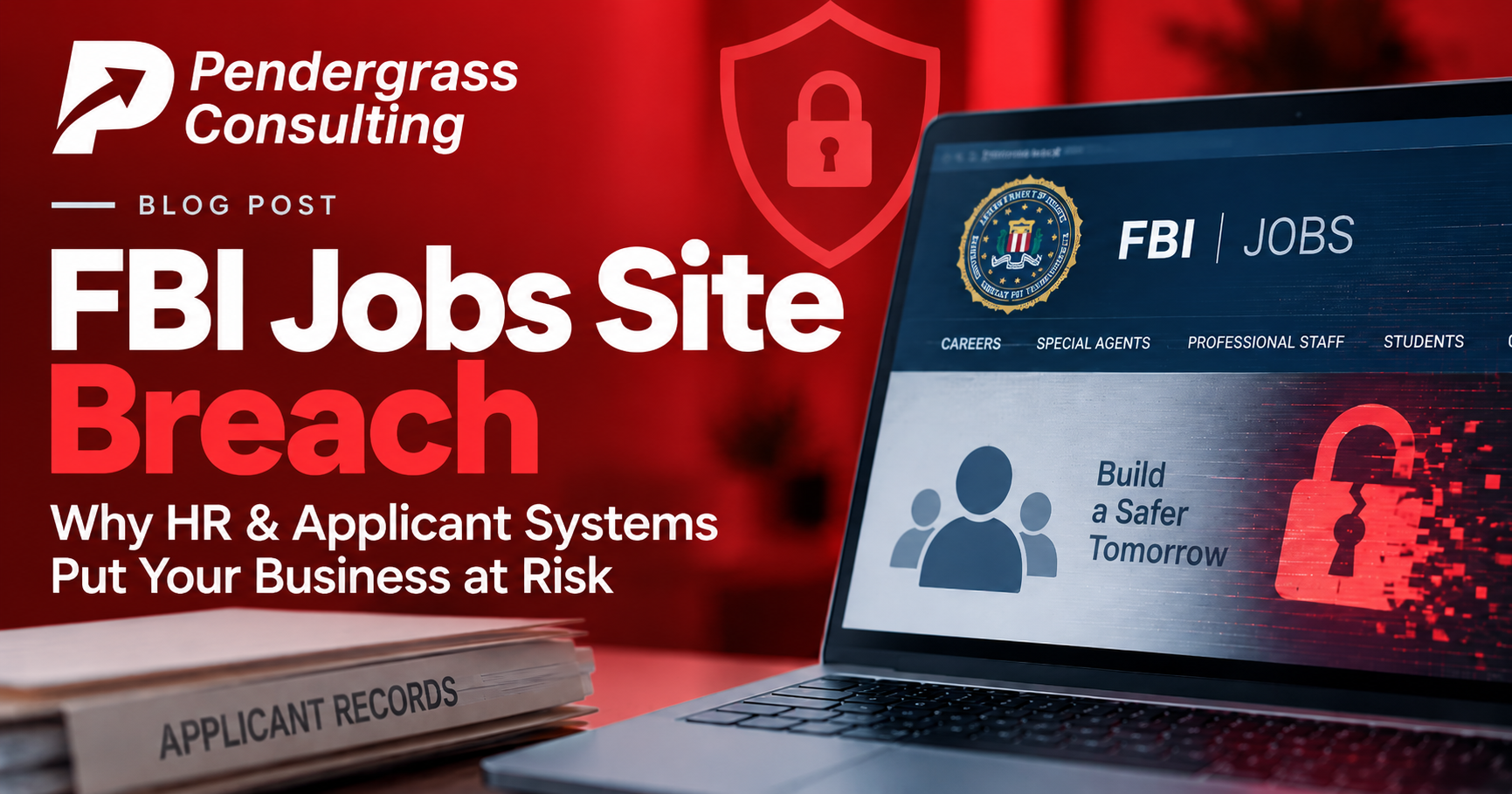
On Tuesday, visitors to the FBI’s jobs website found a message that looked a great deal like the notices the Bureau itself places on criminal websites it shuts down. This site, it announced, had been seized — by a hacking group called ShinyHunters. The Bureau’s job listings and its special agent applicant portal went offline shortly afterward.
The group then told reporters something far more serious than a defaced web page: that it holds sensitive data on nearly every FBI employee and every person who has applied to work there. It handed one outlet a sample of about 5,000 records — names, home addresses, phone numbers, dates of birth, and in some cases details about employees’ spouses.
If you’ve been reading along this month, you’ll recognize the name. ShinyHunters is the same group that claimed — and Florida later confirmed — a breach of that state’s law-enforcement driver database. We’re going to run this the way we ran that one: carefully separating what’s established from what’s asserted by people who benefit from being believed. And then we’re going to talk about the part that applies to your business, which starts with a surprisingly ordinary detail: the front door was the job application page.
What’s established, and what’s claimed
| Established | Claimed by the group, not confirmed |
|---|---|
| The FBI’s jobs site displayed a defacement message crediting ShinyHunters, and the jobs site and special agent applicant portal went offline. | That it holds data on “almost all” FBI agents and every job applicant — reportedly two to three terabytes. |
| The FBI said it is aware of claims regarding unauthorized activity affecting its jobs site and is investigating. | That it compromised criminal justice, HR, and medical services, “and more.” |
| 404 Media, which broke the story, received a sample of roughly 5,000 records and, after checking a portion against public records, reported that the records appear to be real. | That spouse information sometimes includes Social Security numbers. |
| Reuters separately confirmed that the group is claiming responsibility. | That it got in through a previously unknown flaw in widely used enterprise HR software. |
| In May, the FBI issued a public bulletin warning about this group, alleging threatening calls and texts to victims and their families. | That the attack happened Monday night and is not financially motivated. |
That left column is already significant — a defaced federal website and a sample that appears authentic are not nothing. But the headline number, “data on all FBI employees,” is still the group’s claim. The Bureau hasn’t confirmed the scope, and the group’s own history is a reason for caution. When we covered its Florida claim, the group’s account of how it got in turned out to be wrong: it said it exploited a flaw, and the state’s investigation found a stolen credential on a personal device. An attacker’s explanation is a marketing claim, not a finding. We’ll hold the same line here.
The front door was the job application page
Set aside for a moment whether the full claim holds. Look at where the only confirmed intrusion actually landed: the recruiting and job applications system. Not a classified network. Not an investigative database. The public-facing site where people apply for jobs.
That’s not a coincidence, and it’s not unique to the FBI. Recruiting and HR systems have an unusual combination of properties that make them attractive to attackers everywhere:
- They face the public by design. An application portal has to accept submissions from anyone on the internet. That’s its entire job.
- They hold the most sensitive data an organization keeps about its people. Home addresses, dates of birth, Social Security numbers, emergency contacts, family members, background information, sometimes health and benefits data.
- They’re usually third-party software. Almost nobody builds their own HR platform. It’s a vendor product, often run by the HR department rather than IT, updated on someone else’s schedule.
- Nobody thinks of them as a security system. They’re thought of as an HR tool. Which means they frequently get the attention of an HR tool.
Here’s the uncomfortable parallel for a small business: the system holding the most dangerous data about your employees is probably your payroll provider, your HR platform, or whatever tool you use to collect job applications. It holds every employee’s Social Security number, home address, bank account for direct deposit, and often their family members’ details. It’s almost certainly a third-party service. And in most small businesses, the question “who is responsible for securing it?” gets the answer “the vendor, I assume” — which is how the most sensitive data you hold ends up with the least attention.
The people who only applied
There’s a detail in the group’s claim worth pausing on even though it’s unconfirmed, because it describes a problem nearly every business has: the data reportedly covers not just employees, but applicants.
Think about what that means. People who submitted an application — maybe years ago, maybe never hired, maybe went on to work somewhere else entirely — could have their personal details in the same pile as the Bureau’s own staff. They had no ongoing relationship with the organization. They filled out a form once.
Your business almost certainly does the same thing. Every resume that came in through your website. Every application form. Every candidate you interviewed and didn’t hire. Where is all that now? For most small businesses it lives indefinitely — in an inbox, a shared folder, an applicant-tracking account nobody has cleaned out since it was set up. Those people trusted you with their information for one purpose, one time, and you are still holding it. If it’s stolen, they’re harmed for a relationship that ended years ago, or never really began.
This is the same lesson we drew from a very different story earlier this month, when scans of driver’s licenses turned out to be retained long after the transactions that produced them: verify, don’t hoard. Keep applicant data as long as you genuinely need it and any applicable rules require, and then delete it. Data you no longer hold cannot be stolen from you.
Employee data is a safety issue, not just a privacy issue
The reason this story is being treated as serious has less to do with the data itself than with who it belongs to and what it could enable. Reporting has noted that criminals in this same ecosystem have previously used stolen phone records to track, intimidate, and harass the agents investigating them, and the FBI’s own May bulletin accused the group of threatening victims and their families. A home address paired with a spouse’s details is not an abstract privacy harm. It’s a map to someone’s front door.
Your employees are not federal agents, and we’re not going to pretend the risk is equivalent. But the principle scales down cleanly, and it’s one most business owners have never framed this way: when you hold your employees’ home addresses and family details, you’re holding something that can affect their physical safety, not just their credit. Think of the employee going through a difficult divorce, the one who has left an abusive situation, the one with a stalker, the manager who had to fire someone volatile. For those people, an exposed home address is a very different kind of breach.
We made a similar point when criminals obtained home addresses of customers known to hold cryptocurrency: the harm from a breach isn’t always financial. For employee data, that makes protecting it less a compliance chore and more a duty of care to the people who work for you.
A website defacement is proof of access
One last detail worth noting. The group didn’t only claim to have data — it changed the public website to prove it had gotten in, in a way everyone could see. That’s a common extortion tactic, and it carries a lesson that has nothing to do with extortion.
Your website isn’t just marketing. It’s a system running software, connected to other systems, and often holding forms and data. When it’s compromised, the visible defacement is frequently the least of the problem — it’s the part the attacker wanted you to see. The question that matters is what else that access reached. We wrote recently about what we find when we clean up poorly built business websites, including form submissions collected into unprotected databases. A website that takes applications, bookings, or customer information is a data system, and it deserves to be treated like one.
What to actually do
- Know where your employee data lives. Payroll, HR platform, benefits, applicant tracking, and the spreadsheets and folders that inevitably shadow them. Make the list. You can’t protect what you haven’t located.
- Put multi-factor authentication on every one of those systems. Especially the admin accounts. These are the highest-value logins in your business and they should never be password-only.
- Clean out old applicant data. Decide how long you genuinely need to keep applications and candidate information, and delete what’s past that. Check your email and shared folders too — that’s where resumes go to live forever.
- Limit who can see employee records. Home addresses and family details should be visible to the few people who genuinely need them, not everyone with access to the HR tool.
- Ask your HR and payroll vendors the hard questions. How do they secure your data, how quickly do they patch, and how would they notify you of a breach? You’re responsible for your employees’ information even when someone else stores it.
- Treat your website as a data system. Keep it updated, know what forms it collects and where that data goes, and make sure a compromise of the site can’t reach everything else.
Worth asking about your own business: Could you name every system that holds your employees’ Social Security numbers and home addresses? * Do all of them require more than a password to log in? * How far back do your stored job applications go, and do you still need any of them? * And if your HR or payroll vendor were breached tomorrow, would you know — and would you know what to tell your people?
The takeaway
Until the FBI says more, this remains a partially corroborated claim — a confirmed defacement, a sample that appears real, and a scope that only the attackers are asserting. We’ll update if that changes. But the confirmed part is already enough to learn from: one of the most security-conscious organizations in the country apparently had its door opened through the job application page, and the data at stake belongs to people whose safety depends on it staying private.
Every business has a version of that page, and a version of that data. Our environment review helps you find both: where your employee and applicant information actually lives, which third-party systems hold it, whether those logins are properly protected, and how much of it you’re keeping that you could simply let go. The people who work for you — and the people who once applied — trusted you with more than their resumes. Let’s make sure it’s being looked after.
Sources: 404 Media (original reporting, September 22, 2026); Axios; TechCrunch; HuffPost; IBTimes UK; Reuters; BleepingComputer, September 2026; FBI National Press Office statement; FBI public bulletin regarding this group (May 2026). The FBI has acknowledged claims of unauthorized activity affecting its jobs website and is investigating; it has not confirmed the scope of any data theft. The claimed volume of data, the systems allegedly compromised, the method of entry, and the contents of records beyond the verified sample are the group’s own assertions. This article will be updated if the FBI provides further information.