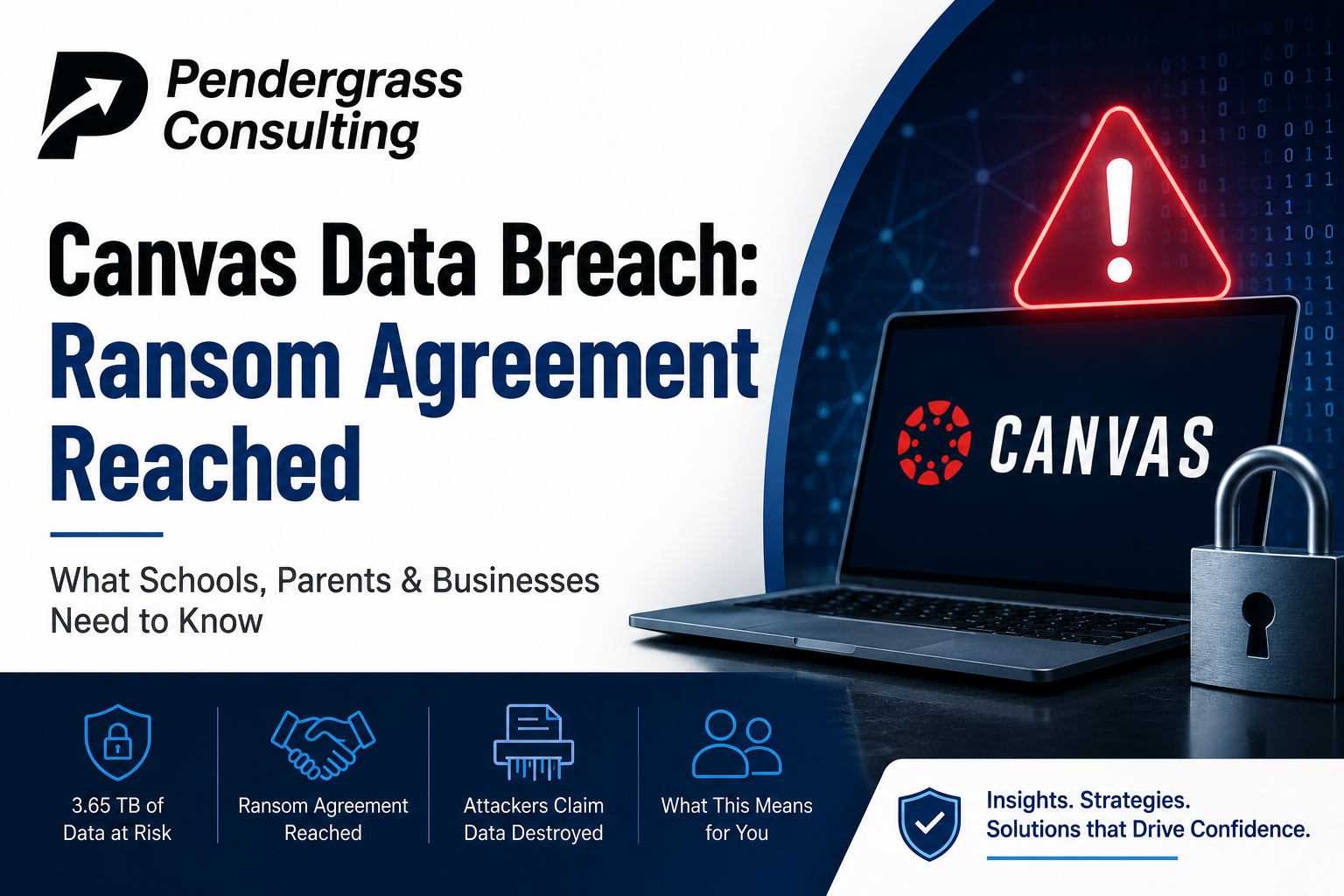
The Canvas data breach story reached a major turning point this morning. Instructure has reached a ransom agreement with the ShinyHunters extortion group, hours before the May 12 leak deadline. The company says it received “shred logs” confirming the stolen data has been destroyed, and that no Canvas customers will be extorted as a result of the incident.
The relief is real. So is the discomfort.
For parents and schools across North Carolina who have been watching this story unfold for the past two weeks, the agreement means the worst-case scenario – the public release of 3.65 terabytes of student and staff data – has at least been delayed, and possibly avoided entirely. But the path the story took to get here is one that every small business owner, every parent, and every IT leader should sit with carefully, because the precedent being set this week will shape cybercrime targeting for years to come.
What Instructure Confirmed
In a statement posted to its incident page late Monday night and confirmed in reporting by BleepingComputer, TechCrunch, The Hacker News, Inside Higher Ed, and The Register, Instructure announced:
- An agreement was reached with ShinyHunters covering all impacted Instructure customers.
- The attackers returned the stolen data and provided shred logs as evidence of its destruction.
- Individual Instructure customers will not be extorted as a result of this incident.
- Instructure acknowledged that “there is never complete certainty when dealing with cybercriminals,” but framed the decision as taking every step within its control to give customers peace of mind.
- CEO Steve Daly issued his first public statement on the incident, apologizing: “We got the balance wrong. We focused on fact-finding and went quiet when you needed consistent updates.”
Instructure has not disclosed the amount paid. Multiple security outlets have noted that Instructure’s listing has been removed from the ShinyHunters public leak site, consistent with the group’s pattern when payments are received. A ShinyHunters representative told TechCrunch: “The data is deleted, gone. The company and its customers will not further be targeted or contacted for payment by us.”
The Technical Story: XSS Flaws and Free-for-Teacher
One of the most significant new details to emerge in the past 24 hours is what actually allowed the attacks to succeed. Reporting from BleepingComputer, drawing on sources familiar with the investigation, has confirmed the technical mechanism:
The attackers exploited multiple cross-site scripting (XSS) vulnerabilities in Canvas’s user-generated content features. By injecting malicious JavaScript into Canvas content, they were able to obtain authenticated administrator sessions and perform privileged actions across the platform. The specific point of entry was Canvas’s Free-for-Teacher (FFT) environment, the free, limited version of Canvas that individual educators can use independently of a school district subscription.
The same vulnerability allowed both the original April 29 breach and the May 7 defacement of approximately 330 Canvas login pages. Instructure says the vulnerabilities have now been patched.
For technical readers: this is a sobering reminder that web application security fundamentals – input sanitization, output encoding, secure handling of user-generated content – remain among the most exploited categories of vulnerability nearly three decades after XSS was first formally documented. For non-technical readers, the takeaway is simpler: even very large, well-resourced software companies make mistakes that sophisticated attackers can find. That is the world your business’s data lives in.
The Uncomfortable Question: Should They Have Paid?
The FBI’s official guidance on ransom payments has been consistent for years: do not pay. The reasoning is straightforward. Every ransom payment funds the next attack. Every successful extortion confirms the business model. Every payment makes the next victim more likely. The U.S. Treasury Department’s Office of Foreign Assets Control (OFAC) has even issued advisories noting that ransom payments to certain sanctioned threat actors may themselves violate U.S. law.
Instructure paid anyway. The company’s calculation was clearly that the harm to its 30 million users from a public data release was greater than the harm of strengthening a cybercrime group. There is no clean answer to that calculation. Most security professionals understand why a company in Instructure’s position would do it. Most security professionals also understand why it makes the problem worse.
The other uncomfortable part: there is no guarantee the data has actually been destroyed. “Shred logs” are documents generated by the attackers themselves. Security researchers have documented multiple cases (notably the 2024 Snowflake customer attacks) where ransomware groups claimed to have deleted data after payment but were later found to still have it – either retaining it for future extortion or selling it to other criminals. Instructure’s own statement acknowledges this: “there is never complete certainty when dealing with cybercriminals.”
Halcyon, the threat intelligence firm that has been tracking this campaign, put it bluntly: “ShinyHunters operates under a ‘pay or leak’ model with no guarantee that ransom payment will prevent public data release; recovery planning should not depend on negotiation outcomes.”
What This Means for North Carolina Families
If you have a child in Wake County Public Schools, Charlotte-Mecklenburg Schools, Durham Public Schools, Cabarrus, Cumberland, or any of the other NC districts affected by this breach – or if your child attends Duke, NC State, UNC, or any UNC system institution – here is the practical reality of where things stand today.
The good news: The immediate threat of public data release has been removed. ShinyHunters has stated publicly that they will not contact your child, your child’s school, or any individual Canvas customer for further extortion. The San Diego Community College District scenario – where students were receiving direct extortion messages – should not be repeated against new institutions as a result of this incident.
The cautious news: The data is in criminal hands and may not actually have been destroyed. Even if it was, the personal details from this breach – names, email addresses, school information, teacher names, message history – are now part of the broader criminal intelligence ecosystem in ways that don’t simply evaporate when one negotiation closes. Expect personalized phishing attempts to continue throughout 2026. The defense remains the same as it was last week.
- Change Canvas passwords if your child uses one (rather than school single sign-on).
- Enable two-factor authentication everywhere it’s offered.
- Be skeptical of any email or text mentioning your child’s school, teacher, or class – even if it sounds real. Open the school’s website directly in a new browser tab and log in from there.
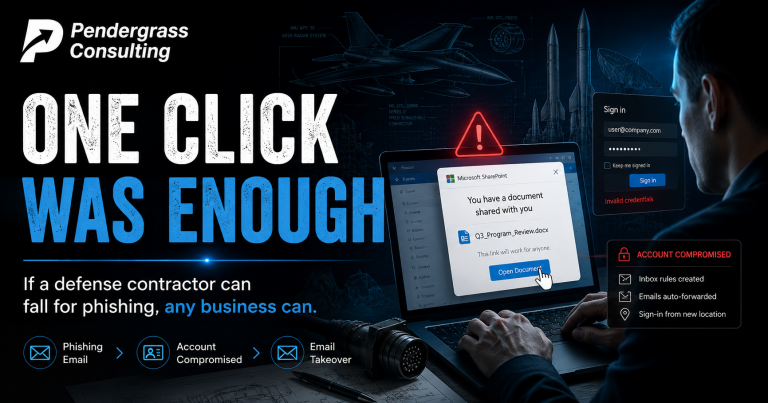
- Watch for “new sign-in detected” alerts. These remain a top phishing lure. Never click the link in such a message – open the site yourself.
- Talk to your kids about extortion messages. If they receive any communication threatening to release content related to school, they should not respond, should not pay, and should bring it to a trusted adult immediately.
- Consider freezing your child’s credit at Equifax, Experian, and TransUnion. It’s free, takes about an hour total, and protects against long-term identity exposure even when the immediate threat has passed.
The Legal Aftermath Is Just Beginning
The settlement with ShinyHunters resolves one piece of Instructure’s exposure. It does not resolve civil liability, regulatory investigations, or the ongoing legal action against the company. Several developments to watch in the coming weeks:
- Class action lawsuits. Multiple law firms have moved past the investigation stage. Filings in the U.S. District Court for the District of Utah (Instructure’s home jurisdiction) are expected within weeks.
- State attorney general investigations. California, New York, and Texas attorneys general have standing under student-privacy and breach-notification laws. North Carolina’s Attorney General may follow.
- Federal regulatory action. The updated COPPA rule (effective April 22, 2026) gives the Federal Trade Commission additional authority for K-12 data involving children under 13. FERPA enforcement responsibility falls on the schools themselves, not on Instructure – which means individual NC districts have their own compliance obligations to consider.
- FBI investigation. The FBI was notified during the incident and is actively investigating. ShinyHunters is a financially motivated criminal group, but international law enforcement coordination remains complicated.
For schools and businesses in North Carolina, the lawyers are about to become a significant part of this story.
The Lesson That Should Stick
Two weeks. Two breaches. 275 million records. Approximately 9,000 institutions worldwide. An FBI notification, a CrowdStrike forensics engagement, a CEO apology, and an undisclosed ransom payment. The Canvas story is unprecedented in scope – and Halcyon’s analysts have flagged it as “the largest educational security breach on record” as of this week.
But here is the lesson that should outlast the headlines:
Wake County Public Schools did not get hacked. Charlotte-Mecklenburg did not get hacked. Duke did not get hacked. NCDPI did not get hacked. Their vendor got hacked. And when the vendor’s incident response broke down – when the same attackers got back in a second time, defaced login pages during finals week, and started threatening individual students directly – the schools had no ability to fix it themselves. They could only wait for the vendor to negotiate.
For every small business in the Triangle, the lesson is the same. Every cloud platform that holds your customer data is a Canvas-shaped risk. Every SaaS tool that holds your employee records is one breach away from becoming your problem. The question worth asking is not “how good is our IT vendor’s security?” – that question has limits because attackers are sophisticated and even good vendors get hit. The question worth asking is: “how would we know, how fast would we respond, and what would we tell our customers if any one of our vendors got breached tomorrow?”
That is the conversation worth having before it happens to you, not after.
How Pendergrass Consulting Helps
Vendor risk, breach response, and employee training are exactly the gaps where small businesses are most exposed – because nobody whose job it is to think about these things is on staff. That is where we come in.
Our managed cybersecurity service for small businesses across the Research Triangle includes:
- Vendor inventory and risk assessment so you know what data is sitting where
- Account security hardening across your business’s SaaS platforms
- Security awareness training for employees built around real, current threats – including post-breach phishing, voice phishing, and “new sign-in detected” lures
- Incident response planning so you have a real playbook when a vendor of yours announces a breach
- Quarterly reviews to walk through what changed and what’s coming next
If you have never had a real conversation about which vendors hold your business’s data, what you would do if any of them got breached, or whether your team would recognize a personalized phishing campaign that referenced real details about your business – that conversation is worth having now.
Pendergrass Consulting
Phone: 252-432-3325
Email: Sales@PendergrassConsulting.com
110 S. Massey St., Suite 201, Selma, NC 27576
Pendergrass Consulting is a full-service IT firm based in Selma, NC, serving small businesses and families across the Research Triangle, Raleigh, Cary, Wake County, Johnston County, and nationally for web, hosting, email, cloud backup, cybersecurity, and digital marketing services.