Yes, This Is Real — And It’s Already Being Exploited
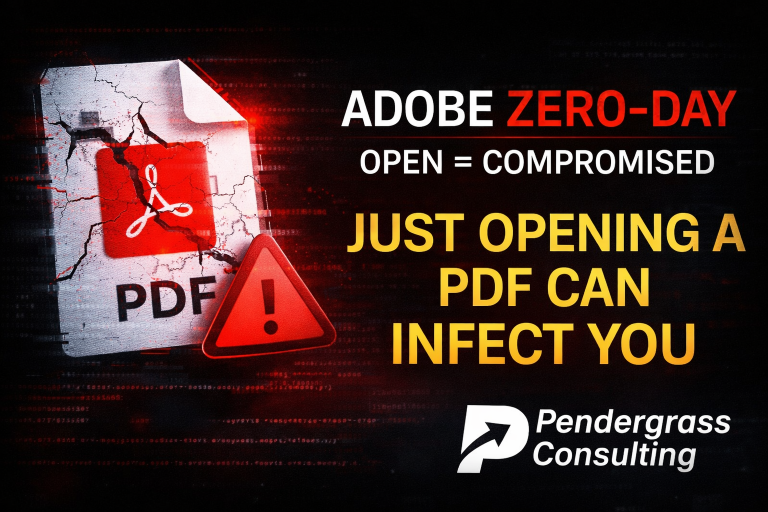
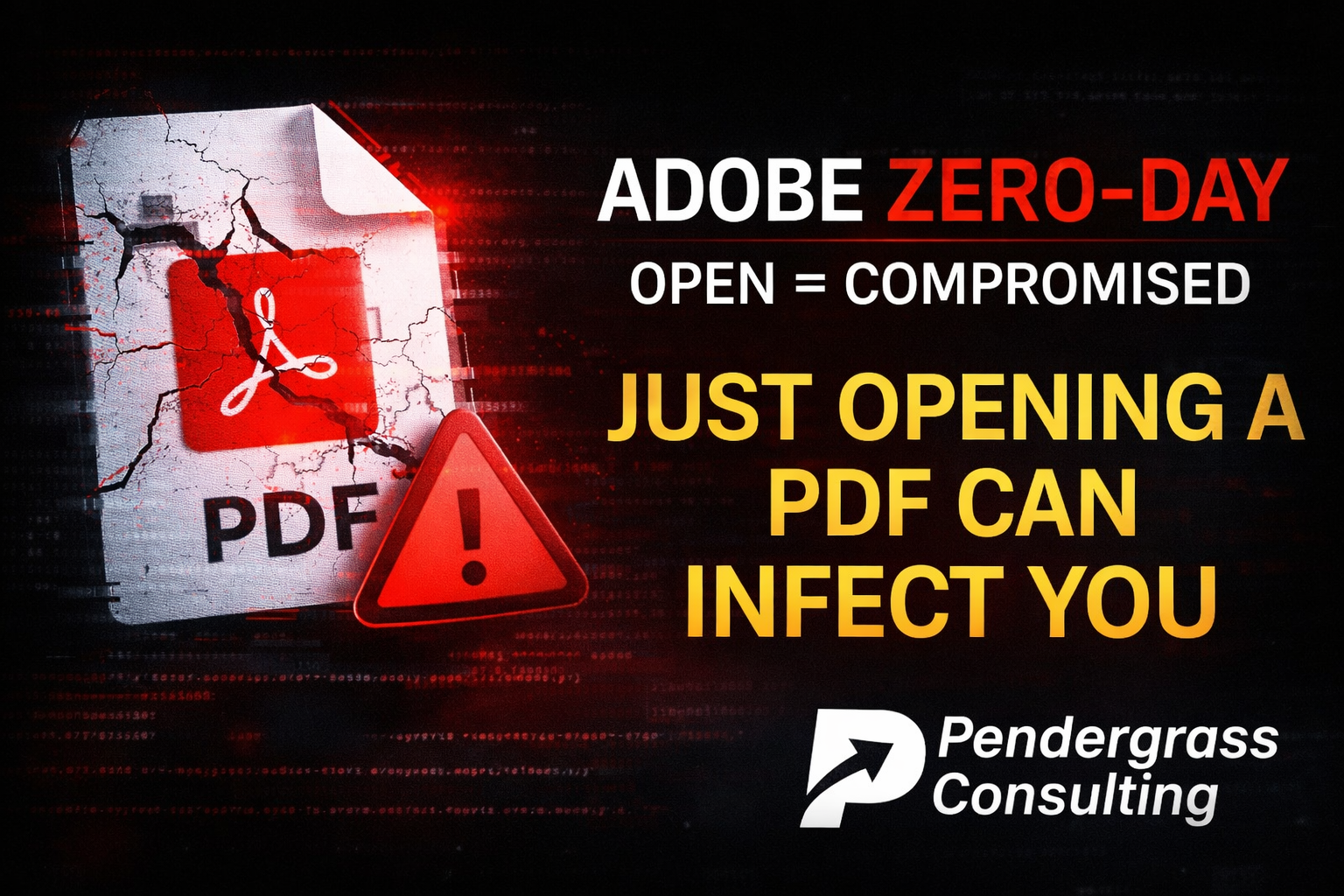
If you’ve seen the headlines about a critical Adobe Acrobat and Reader vulnerability making the rounds, let us save you some time: it’s real, it’s serious, and you need to act on it today.
CVE-2026-34621 is a critical zero-day vulnerability affecting Adobe Acrobat and Reader on both Windows and macOS. It carries a CVSS score of 9.6 out of 10 — about as severe as vulnerabilities get. Adobe has confirmed the flaw and released an emergency security update (bulletin APSB26-43), recommending that all users install the patch within 72 hours.
The worst part? This vulnerability has been actively exploited in the wild since at least December 2025 — meaning attackers have had months of head start before anyone even knew the flaw existed.
What the Vulnerability Actually Does
CVE-2026-34621 is classified as a Prototype Pollution vulnerability (CWE-1321). In practical terms, it allows an attacker to craft a malicious PDF file that, when opened by a victim, executes arbitrary code on their system. No special permissions are needed. No macros to enable. No additional clicks required. You open the PDF, and the exploit runs.
The attack works by abusing legitimate but privileged JavaScript APIs built into Adobe Reader’s runtime environment. When a victim opens the weaponized PDF, heavily obfuscated JavaScript executes automatically, allowing the attacker to read local files, harvest sensitive data, and potentially deliver additional payloads including full remote code execution.
Security researcher Haifei Li, the founder of the EXPMON exploit detection platform, discovered the campaign on March 26, 2026, when a suspicious PDF sample triggered one of EXPMON’s advanced detection features. Variants of the exploit had been submitted to VirusTotal as early as November 2025, and evidence suggests active exploitation campaigns targeting energy infrastructure and other sectors have been running since at least December 2025.
Who Is Affected
If you use Adobe Acrobat or Adobe Reader on Windows or macOS, you are affected. Specifically, versions 24.001.30356, 26.001.21367, and all earlier versions contain the vulnerable code path. That covers both the free Reader and the paid Acrobat Pro and Standard editions.
Mobile users on iOS and Android appear to be unaffected, as the exploit targets x86 and x64 architectures specifically.
Think about how many PDFs flow through your business every single day — invoices, contracts, proposals, shipping documents, tax forms, resumes. Every one of those is a potential attack vector if your Adobe software isn’t patched.
Why This One Is Different
Zero-day vulnerabilities are discovered regularly, but several factors make CVE-2026-34621 especially concerning:
- Months of silent exploitation. Attackers have been using this since late 2025. If your organization received a malicious PDF during that window, you may already be compromised without knowing it.
- Trivial exploitation. The attack requires nothing more than opening a PDF file. No social engineering tricks beyond getting someone to open a document — something people do hundreds of times a day without thinking twice.
- Broad target surface. Adobe Reader is one of the most widely installed applications on the planet. Every industry, every size business, every government agency uses it.
- Sophisticated evasion. The exploit doesn’t use traditional memory corruption techniques like buffer overflows. Instead, it abuses legitimate APIs, making it harder for traditional security tools to detect.
- Targeting critical sectors. Early reporting indicates the campaign has specifically targeted energy infrastructure, financial institutions, and government organizations — but that doesn’t mean smaller businesses are safe. Attackers frequently pivot through smaller targets to reach larger ones.
What You Need to Do Right Now
Here’s your action checklist — don’t put this off:
- Update Adobe Acrobat and Reader immediately. Open the application, go to Help > Check for Updates, and install the latest security update referencing bulletin APSB26-43. Do this on every machine in your organization — desktops, laptops, and any shared workstations.
- Disable JavaScript in Adobe Reader. Until you’ve confirmed every machine is patched, go to Edit > Preferences > JavaScript and uncheck “Enable Acrobat JavaScript.” This is the single most effective interim mitigation available. Yes, it will break some interactive PDF forms — that’s a small price to pay.
- Stop opening unexpected PDF attachments. Train your team to treat unsolicited PDF attachments with the same suspicion they’d give an executable file. If you weren’t expecting it, verify with the sender before opening it.
- Consider alternative PDF viewers temporarily. Browser-based PDF viewers (Chrome, Edge, Firefox all have built-in PDF rendering) are not affected by this vulnerability. For the next few days, consider using your browser to preview PDFs rather than Adobe Reader.
- Check your logs for indicators of compromise. Security teams should monitor for AdobeCollabSync.exe making unexpected external network connections. Block the known attacker-controlled IPs: 169.40.2.68 and 188.214.34.20. Block HTTP/HTTPS traffic containing “Adobe Synchronizer” in the User Agent field.
- Review your patch management process. If it takes your organization more than 72 hours to deploy a critical security update, that gap is a vulnerability in itself. This is the kind of exploit that punishes slow patchers.
The Bigger Lesson Here
PDFs are one of the most trusted file formats in business. That’s exactly what makes them so dangerous as an attack vector. We’ve been conditioned to open them without hesitation — they’re “just documents.” But a PDF is actually a complex container format capable of embedding JavaScript, executing code, and interacting with your operating system in ways most users never realize.
This vulnerability is a reminder that patch management isn’t optional and that every application on your network is a potential entry point. It’s also a reminder that zero-day attacks don’t announce themselves. The four-plus months of silent exploitation before discovery is the norm, not the exception.
How Pendergrass Consulting Can Help
Patch management, vulnerability assessment, and endpoint security are exactly the kind of problems we solve at Pendergrass Consulting. Whether you need help auditing your current security posture, setting up a proper patch management workflow, or conducting penetration testing through our offensive security practice — we’re here for it.
We’re not a faceless vendor who sends you a report and disappears. We’re a partner who sits down with you, explains what’s actually going on, and helps you fix it. Over 20 years of hands-on IT experience. No contracts. No runaround.
Call us at 252-432-3325 or email Sales@PendergrassConsulting.com