Anthropic Just Said ‘No’ to the Pentagon. Here’s Why That Matters.

A Line in the Sand
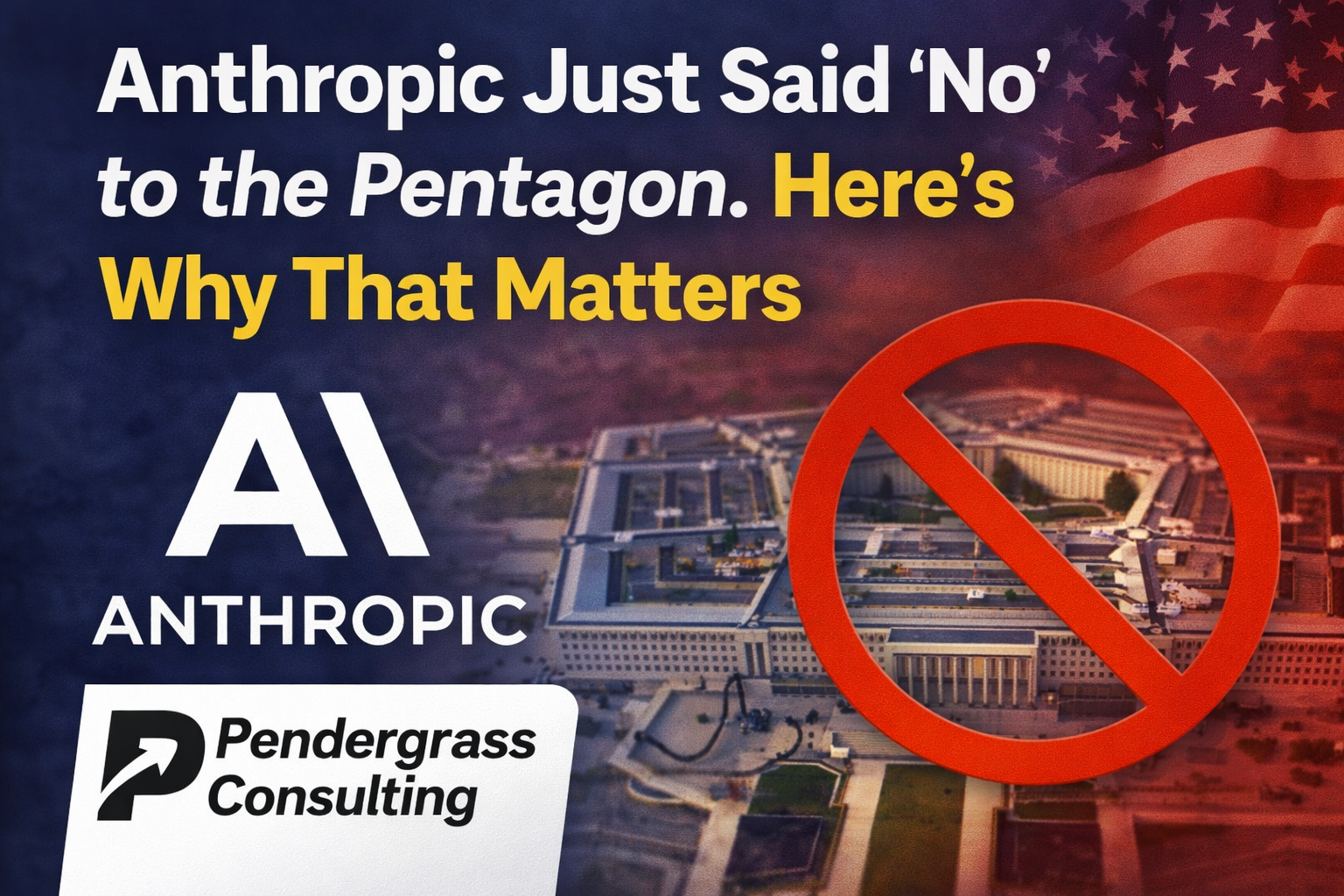
Today, the Trump administration blacklisted Anthropic — one of the leading AI companies in the world — from all federal government use. The reason? Anthropic refused to remove two restrictions from its AI system, Claude:
- No fully autonomous weapons without human oversight
- No mass surveillance of American citizens
That’s it. Those were the two lines Anthropic wouldn’t cross. And for that, the Pentagon labeled them a ‘supply chain risk to national security’ — a designation typically reserved for companies with ties to foreign adversaries.
President Trump called them ‘leftwing nut jobs’ on Truth Social. Defense Secretary Pete Hegseth accused CEO Dario Amodei of having a ‘God complex.’ A senior Pentagon official called him a ‘liar’ who is ‘ok putting our nation’s safety at risk.’
All because a company said: we won’t help build machines that kill without human judgment, and we won’t help spy on our own citizens.
I think Anthropic made the right call. And I think it matters — not just for the AI industry, but for all of us.
What Actually Happened
Let me back up and explain what led to this moment.
Anthropic’s Claude AI has been working on the Pentagon’s classified networks since last summer — the first AI model to do so. The contract was worth up to $200 million. By all accounts, the military loved it. One defense official admitted it would be a ‘huge pain’ to replace.
But Anthropic’s contract included an acceptable use policy with two restrictions: Claude couldn’t be used for autonomous weapons systems (weapons that select and engage targets without human involvement) or for mass domestic surveillance.
The Pentagon wanted those restrictions removed. Not because they claimed to have immediate plans to use AI for those purposes — they insisted they didn’t — but because they wanted the freedom to use the technology however they saw fit. No limitations. No corporate oversight. No terms of service.
As a Pentagon spokesperson put it: ‘We will not let ANY company dictate the terms regarding how we make operational decisions.’
Anthropic’s CEO, Dario Amodei, met with Defense Secretary Hegseth on Tuesday. The meeting was reportedly cordial. But Anthropic’s answer was still no.
‘Threats do not change our position,’ Amodei said in a statement Thursday. ‘We cannot in good conscience accede to their request.’
Today, the hammer came down. Trump ordered all federal agencies to stop using Anthropic’s technology. The Pentagon designated them a supply chain risk. Any company that does business with the military now has to certify they don’t use Claude in their workflows.
The message was clear: fall in line, or face the consequences.
Why I Think Anthropic Got This Right
Let’s be clear about what Anthropic was not doing. They weren’t refusing to work with the military. They weren’t blocking all defense applications. They weren’t saying AI can’t be used in national security contexts.
They drew two specific lines:
No autonomous weapons without humans in the loop. This isn’t a radical position. It’s actually the mainstream view among AI ethics researchers, international law experts, and even many military leaders. The idea that machines should make life-or-death decisions without human judgment is deeply troubling — not just morally, but practically. AI systems make mistakes. They can be fooled. They don’t understand context the way humans do. Keeping humans in the loop for lethal decisions isn’t weakness — it’s wisdom.
No mass surveillance of American citizens. This should be even less controversial. The Fourth Amendment exists for a reason. The government spying on its own citizens at scale is the kind of thing we criticize authoritarian regimes for. An AI system capable of processing vast amounts of data makes mass surveillance exponentially more powerful — and more dangerous. Refusing to be part of that isn’t ‘leftwing’ politics. It’s basic respect for civil liberties.
What strikes me most about Anthropic’s position is that they weren’t trying to control military decisions. They were simply saying: we won’t provide the tools for these specific uses. The Pentagon is free to find another provider. They’re free to build their own systems. Anthropic was just saying they wouldn’t be the ones to enable it.
That’s not a ‘God complex.’ That’s a company with principles.
The Contrast With Other AI Companies
Here’s what makes this story even more significant: Anthropic stood alone.
According to reports, xAI (Elon Musk’s company), Google, and OpenAI have all agreed to the Pentagon’s terms. They’ll provide AI for ‘all lawful purposes’ — no restrictions, no guardrails, no ethical red lines.
Now, to be fair, OpenAI’s CEO Sam Altman reportedly said he ‘shares Anthropic’s concerns.’ And hundreds of employees at Google and OpenAI have signed petitions calling on their companies to mirror Anthropic’s position. But the companies themselves fell in line.
This creates an interesting market dynamic. The Pentagon will get what it wants from someone — if not Anthropic, then its competitors. In the short term, Anthropic loses a $200 million contract and potentially much more if the supply chain designation scares off enterprise customers with government ties.
But in the long term? Anthropic has established itself as the AI company that won’t compromise on certain principles, even when it costs them. For businesses and individuals who care about how AI is developed and deployed, that matters. It’s a differentiation that can’t be bought — only earned.
The Bigger Picture: Who Controls AI?
This confrontation isn’t really about one contract or one company. It’s about a fundamental question: who gets to decide how AI is used?
The Pentagon’s position is that the government — specifically, the military — should have unrestricted access to any technology it licenses. If a company wants to do business with the Department of Defense, it plays by the Pentagon’s rules. Period.
Anthropic’s position is that some uses of AI are dangerous enough that responsible developers should refuse to enable them, even if it means losing business. Companies have both the right and the responsibility to set ethical boundaries on their products.
This tension isn’t going away. As AI becomes more powerful, the stakes only get higher. Today it’s autonomous weapons and mass surveillance. Tomorrow it could be AI-generated propaganda, deepfake warfare, or systems that can destabilize economies.
Someone has to draw lines. If AI companies won’t do it, and the government actively resists any limitations, who will?
What This Means for the AI Industry
The Trump administration’s response to Anthropic sends a clear message to every AI company: don’t even think about restricting how the government uses your technology.
As one policy analyst noted, this is meant to signal to other AI companies ‘that they are negotiating with to make sure they do not attempt to put any sort of restrictions on AI’s uses.’
That’s chilling. We’re watching the government actively discourage ethical guardrails in AI development. At a time when AI capabilities are advancing faster than our ability to understand their implications, the message from Washington is: full speed ahead, no brakes allowed.
This should concern everyone, regardless of political affiliation. The question of how AI should be used in warfare and surveillance isn’t a left-right issue. It’s a question about what kind of future we want to build.
Why I Support Anthropic’s Stand
I use Claude — Anthropic’s AI — in my work. I chose it specifically because Anthropic has consistently demonstrated a commitment to responsible AI development. They publish their safety research. They think carefully about potential harms. They build guardrails into their systems.
Today’s news reinforces why I made that choice.
In a world where AI companies are racing to capture market share and government contracts, Anthropic walked away from $200 million — and potentially much more — because they believed some things are more important than revenue.
That’s rare. And it matters.
We’re at a pivotal moment in AI development. The decisions being made right now will shape how this technology affects our lives for decades to come. I want the companies building these systems to think carefully about the consequences. I want them to have principles they won’t abandon when powerful people apply pressure.
Anthropic showed us what that looks like today. Whatever happens next, they’ve earned my respect — and my continued business.
The Road Ahead
It’s not clear what happens from here. Anthropic hasn’t said whether they’ll fight the designation in court. The six-month wind-down period gives them time to consider options. Meanwhile, other AI companies will presumably fill the gap the Pentagon needs filled.
But something important happened today. A major AI company was asked to enable autonomous weapons and mass surveillance, and they said no. They said it publicly. They held the line even when threatened with severe consequences.
In an industry that often talks about AI safety and ethics in abstract terms, Anthropic made it concrete. They showed us what it actually costs to have principles.
And they showed us that some companies are willing to pay that price.
At Pendergrass Consulting, we believe technology should serve people — not the other way around. If you have questions about AI, cybersecurity, or how emerging technology affects your business, contact us for a conversation.